Innovations in aortic aneurysm repair are transforming vascular care. An aortic aneurysm poses a life-threatening risk if it ruptures, ranking as a leading cause of death due to internal bleeding. Earlier diagnosis and minimally invasive techniques are improving outcomes in East Tennessee and beyond.
Traditional open aortic aneurysm repair uses a large incision to replace the weakened aorta with a synthetic graft, while minimally invasive endovascular repair uses small groin incisions and a stent graft for faster recovery. Recognizing rupture symptoms—like sudden pain or dizziness—is critical. APEX Vascular offers expert screening, monitoring, and both open and minimally invasive repair options across East Tennessee.
What Is an Aortic Aneurysm?
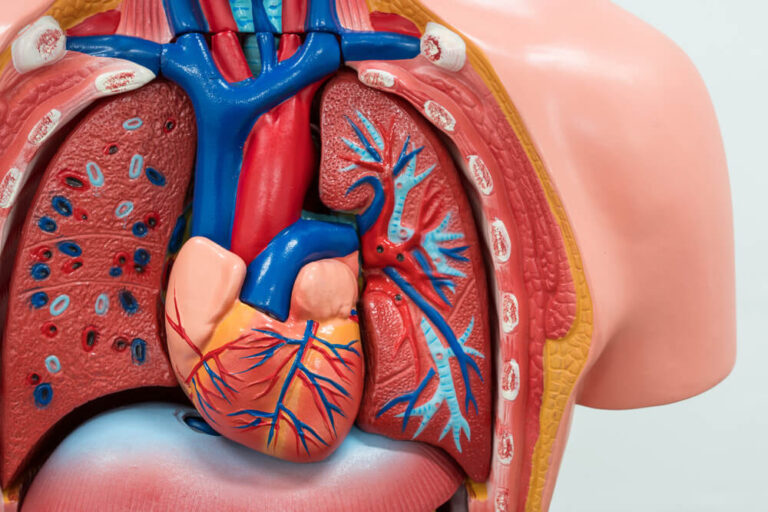
The aorta, the body’s largest artery, carries oxygen-rich blood from the heart to all other organs and tissues. When a section of its wall weakens, the constant pressure of blood flow can cause it to bulge outward. This forms an aortic aneurysm. This balloon-like enlargement stretches and thins the vessel wall over time, raising the risk of a dangerous rupture or tear.
The most common form of aneurysm is abdominal aortic aneurysms (AAA), which occur in the segment that runs through the abdomen. Physicians typically recommend repair when:
- Diameter reaches approximately 5.5 cm in men or about 5.0 cm in women
- An aneurysm grows more than 0.5 cm in six months
- Growth exceeds 1 cm in a year
- Symptoms develop such as abdominal, flank, or back pain
- Imaging suggests high rupture risk
For smaller, stable aneurysms, “watchful waiting” with periodic ultrasound or CT imaging. This is combined with aggressive control of cardiovascular risk factors, including smoking, hypertension, and cholesterol.
Traditional Open Aortic Aneurysm Repair
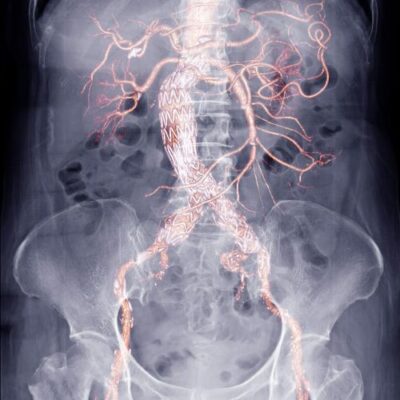
Traditional open aortic aneurysm repair has been the standard treatment for aortic aneurysms for decades and remains an important option for complex cases.
During open repair:
- A surgical incision is made in the abdomen or chest
- The aorta is clamped above and below the aneurysm
- The aneurysm sac is opened
- A synthetic graft (usually Dacron or PTFE) is sewn into place to replace the diseased vessel
An “open” approach to repair remains necessary for complex anatomy. This includes infected aneurysms, extensive thoracoabdominal aneurysms, or anatomy unsuitable for endovascular stent graft placement.
Trade-offs include higher surgical stress and greater blood loss. Longer recovery is also expected, often lasting several days in the hospital and followed by weeks at home. This can make minimally invasive options much more attractive if they’re an option.
Minimally Invasive Endovascular Repair
The key innovations in aortic aneurysm repair include smaller incisions with minimal tissue disruption. This results in shorter hospital stays (often 1–2 days) and faster recovery (weeks versus months).
Endovascular aortic aneurysm repair (EVAR) offers a less disruptive alternative to open surgery. It allows surgeons to repair many aneurysms through small groin incisions rather than a large abdominal incision.
Using catheter-based techniques, a stent graft is delivered through the femoral arteries and deployed across the aneurysm under fluoroscopic imaging. Once expanded, the graft creates a new internal pathway for blood flow, excluding the aneurysm from circulation.
Benefits of EVAR include:
- Smaller incisions
- Reduced blood loss
- Shorter hospital stays (often 1–2 days)
- Faster recovery
- Lower early complication rates
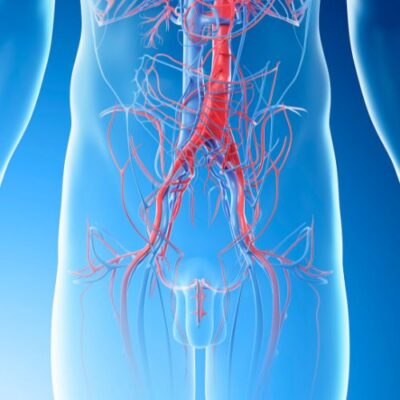
Expanded stent graft designs now accommodate more complex anatomies. This includes branched or fenestrated options for challenging cases previously limited to open repair.
Advanced EVAR technology: fenestrated and branched grafts
Modern stent graft systems now include fenestrated and branched designs that allow treatment of complex aneurysms involving arteries that supply the kidneys and intestines. These grafts contain precisely positioned openings that maintain blood flow to vital organs while sealing the aneurysm.
EndoAnchor technology (Heli‑FX EndoAnchor System)
One of the most significant advancements in EVAR durability is EndoAnchor technology. EndoAnchors function like tiny screws that attach the stent graft directly to the aortic wall.
EndoAnchors help:
- Improve graft fixation
- Prevent graft migration
- Treat or prevent Type I endoleaks
- Reinforce short or challenging aortic neck anatomy
The Heli‑FX EndoAnchor system allows these anchors to be deployed through a catheter during EVAR procedures. This provides mechanical fixation similar to surgical sutures used in open repair and helps improve long‑term stent graft stability.
Recognizing Emergency Symptoms of Rupture
A ruptured aortic aneurysm demands immediate recognition to enable life-saving aortic aneurysm repair. Urgent warning signs include:
- Sudden severe pain in the abdomen, back, or chest
- Dizziness or fainting
- Nausea or vomiting
- Cold and clammy skin
- Profuse sweating
- A fast heart rate
These symptoms signal massive internal bleeding and shock. This is a medical emergency requiring an instant 911 call, even for patients already under aneurysm surveillance. This means that you shouldn’t drive yourself or wait for symptoms to subside.
Fortunately, 96% of aortic aneurysm patients who are eligible for surgery survive the first 48 hours.
Trust APEX Vascular for Repairing Your Aortic Aneurysm
APEX Vascular is here for your aortic aneurysm detection, monitoring, and treatment. Our board-certified vascular surgeons offer personalized care across Knoxville, Lenoir City, and Crossville, Tennessee.
Our team uses noninvasive vascular ultrasound for accurate screening and ongoing monitoring of small aneurysms. This helps prevent emergencies through timely intervention. You’ll benefit from our expertise in both open and minimally invasive aortic aneurysm repair, tailored to your individual risks and anatomy.
If you’re at risk, it’s important to schedule a vascular ultrasound screening or consultation to discuss your personal risk, imaging, and repair options. Contact APEX Vascular today to determine if screening, continued monitoring, or minimally invasive repair suits your needs.

Open aortic aneurysm repair requires a large incision to reinforce the weakened vessel with a graft, while minimally invasive endovascular repair uses small incisions and a stent graft for quicker recovery. Recognizing sudden pain or dizziness is vital. APEX Vascular provides advanced screening, monitoring, and tailored repair solutions throughout East Tennessee.
APEX Vascular is a vascular surgery and vein center with locations in Knoxville, Oak Ridge, Lenoir City, Sevierville, Crossville, Decatur, and Harrogate, TN. We are dedicated to delivering personalized, high-quality care that goes beyond medical treatment. Our exceptional vascular staff, boasting extensive experience in vascular surgery, works tirelessly to elevate the standards of patient care and contribute to your overall well-being. Visit us online or call us at 865-562-3232 to request an appointment today!